Friday, August 2, 2013

THE CARROT, THE EGG, AND THE COFFEE BEAN

A young woman went to her mother and told her about her life and how things were so hard for her. She did not know how she was going to make it and wanted to give up. She was tired of fighting and struggling.

It seemed that as one problem was solved, a new one arose. Her mother took her to the kitchen. She filled three pots with water and placed each on a high fire. Soon the pots came to a boil. In the first, she placed carrots, in the second she placed eggs, and in the third she placed coffee beans.

She let them sit and boil, without saying a word. In about twenty minutes, she turned off the burners. She fished the carrots out and placed them in a bowl. She pulled the eggs out and placed them in a bowl. Then she ladled the coffee out and placed it in a bowl. Turning to her daughter, she asked, ‘Tell me, what do you see?’ ‘Carrots, eggs, and coffee,’ the young woman replied. The mother brought her closer and asked her to feel the carrots. She did and noted that they were soft. She then asked her to take an egg and break it. After pulling off the shell, she observed the hardboiled egg. Finally, she asked her to sip the coffee. The daughter smiled as she smelled its rich aroma. The daughter then asked, ‘What does it mean, mother?’

Her mother explained her that though each of these objects faced the same adversity-boiling water-each reacted differently. The carrot went in strong, hard and unrelenting. However, after being subjected to the boiling water, it softened and became weak.

The egg had been fragile. Its thin outer shell had protected its liquid interior. But, after sitting through the boiling water, its inside hardened! The coffee beans were unique, however. After being subjected to the boiling water, they had changed the water.

‘Which one are you?’ the mother asked her daughter. ‘When adversity knocks on your door, how do you respond? Are you a carrot, an egg or a coffee bean?’ Think of this: which one am I? Am I the carrot that seems strong but in times of pain and adversity, do I wilt, become soft and lose my strength? Am I the egg that starts with a malleable heart, but changes with the heat? Did I have a fluid spirit but, after a death, a break-up, or a financial hardship, does my shell look the same, but on the inside am I bitter and tough with a stiff spirit and a hardened heart? Or am I like the coffee bean? The bean actually changes the hot water – the very circumstance that brings the pain. When the water gets hot, it releases the fragrance and flavour.

If you are like the bean, when things are at their worst, you get better and change the situation around you. When the hours are the darkest and trials are at their greatest, do you elevate to another level? How do you handle adversity? Are you a carrot, an egg, or a coffee bean?

We find that many people Quit when things go wrong for them. It’s when things go wrong that you should not quit. Ella Wheeler Wilcox mentions in the poem ‘Worth While’ It is easy enough to be pleasant when life flows by a song, but the man worthwhile is the one who will smile when everything goes dead wrong. You have to face any situation with an equanimous mind and gladly accept whatever may be the end result.

Be blissful.

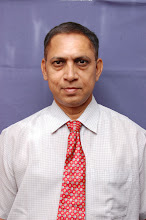
S.SEKAR
Contact: sekrajc@yahoo.com

Tuesday, July 30, 2013

CHANGE YOURSELF FIRST

To change one’s own self first is a difficult task but that is how we can effect a change around us. By expecting others to change themselves without taking any step to change oneself will result in dissatisfaction and unhappiness.

For making a change, you have to act in this world. Think of the reality (Brahman) and do whatever you want to do. Change comes when you move from self-centeredness (inability to accommodate anything beyond your own interests) to unselfishness and then finally to selflessness. The formula of success is to move from selfish desires to unselfish desires to selfless desires. By your own acts, make your home become a centre for happiness. Then the world will compliment you.  You are the architect of your fortunes. You are the architect of your misfortunes. Eradicate your Vasanas (Unfulfilled Desires) so that mind and intellect is absorbed in the truth. Then you merge with the reality. If you are determined to be healthy, your mind will think about being healthy. Mind and intellect get absorbed in this reality and you merge with the truth. We could be called “Brahman - proof”. Brahman is a word for God. Brahman is Allah in Islam and Jesus in Christianity. God is beyond human conception. He has no birth and death. You cannot perceive god. You can only become God.
Human – Desire = God.
You have got to use life to find the truth. For this to happen, Change yourself not the world.

Tell yourself “I will change myself every day in every way”. If told with Bhakti and devotion, you will find a change in yourself and further notice the changes happening around you. Whatever happens in life happens with a reason. God wanted to teach me a few lessons. I believe in hard work and God. I know god is always with me and I think of him wherever I go.  “What is the difference between school and Life? In school, you’re taught a lesson and then given a test. In life, you’re given a test that teaches you a lesson”.

President John F. Kennedy in his inaugural address in January 1961, mentioned to the fellow Americans, “Ask not what your country can do for you – Ask what you can do for your country”. JFK told the fellow citizens of the world, “Ask not what America will do for you, but what together we can do to the freedom of man”.

Mahatma Gandhi said, “You must be the Change you wish to see in the world”. We should remember; where there is Love there is Life.  Happiness is when what you think, what you say, and what you do are in harmony. In order to bring about positive change in the world we need not only engage with the outer world but also engage with our inner world. If we want to see greater awareness in the world, we have to cultivate awareness. If we want to see greater harmony and less strife, we need to learn to become more adept at handling our emotions and learn to respond to frustrations with more patience and kindness than we do at present.

Meditation helps us to recognize unhelpful emotional patterns and to develop the mental freedom to choose responses that are more helpful. Among the virtues that Lord Krishna mentioned to Arjuna, at the foremost was, ‘Never hate anyone’.  The cultivation of love and kindness helps us to find alternative and more compassionate responses. Meditation helps us to be the change we wish to see in the world. The thought of Change comes from within. When you have understood the benefits of Change, you have to do Nidhithyasanam and be an example for others to follow.

We should know that nature cannot be changed because what cannot be changed is nature. Wisdom or intelligence is preparing the mind to accept the choiceless or helpless situations without any resistance. Success is not conquering the whole world. Success is accepting everything you get as a gift from God. By repeating to ourselves (meditation / Nidhithyasanam) and repeating to our mind that I am willing to undergo the choiceless situations, we get freedom from stress. Examples of choiceless situations are old age, incurable disease, separation from someone etc. The only one who can be changed by me is myself. Pray to the Bagawan, “O Lord; give me the courage to change what can be changed i.e. myself. O lord give me the serenity to understand the difference that others cannot be changed and that I should only change myself”.

Begin with yourself and be the change agent. You can set an example for others to follow. This positive approach will definitely yield good results.

The following words are said to be written on the tomb of an Anglican bishop in the crypts of Westminster abbey in London, England.

“When I was young and free and my imagination had no limits, I dreamed of changing the world. As I grew older and wiser, I discovered the world would not change –

So I shortened my sights somewhat and decided to change only my country, but it too seemed immovable.

As I grew into my twilight years, in one last desperate attempt, I settled for changing only my family, those closest to me, but alas, they would have none of it.

And now I realise as I lie on my death bed, If I had only changed myself first, then by example I would have changed my family. From their inspiration and encouragement, I would then have been able to better my country,

And who knows, I might have even changed the world”.  

Let us be the factor of change. Change yourself first, and see the change in the world around you thereafter. Start with yourself and you can find your life peaceful and joyful. It is difficult to change but not impossible. Every human being can make a life for himself.


Be blissful

S.SEKAR

Tuesday, July 2, 2013

MEDITATION – A MENTAL EXERCISE

Meditation is a mental exercise and has several benefits.  Meditation can be used in several areas including the health of a person. The sixth chapter of Bhagavad Gita analyses meditation as a spiritual sadana as prescribed in the scriptures. In the spiritual context, meditation is not for the attainment of Moksha. Moksha is our very nature. We do not have to attain Moksha through any effort including through meditation. Secondly, meditation is not meant for getting extra ordinary powers or extra ordinary experience. According to our scriptures, extra ordinary powers or extra ordinary experiences have nothing to do with spirituality or spiritual growth. On the other hand, extra ordinary powers or experiences become obstacles for spiritual growth. A serious spiritual seeker must go far away from extra ordinary powers or extra ordinary experiences. Third misconception to be negated is that meditation is not meant for getting spiritual knowledge. For attaining knowledge, one has to go through spiritual education program under a spiritual Guru (Mundaka Upanishads) say the Scriptures. Guru starts teaching systematically the spiritual education program. In the second chapter of Gita Arjuna wanted spiritual education and Lord Krishna starts to teach spiritual education in a systematic way.

A question arises as to why this blessed meditation. It is for a smoother purpose other than those three mentioned above.  Meditation has an important purpose. Meditation is for refinement of mind before exposing to spiritual education program. It is for receiving the teaching and retain the teaching. (Gnanayogyada prapti). It is called preparatory meditation. It polishes the mind. It is a fitness exercise for the mind like a fitness exercise for the physical body. Only the mind receives the knowledge and not the “Athma” or the “Body”. Mind has to be refined to receive the knowledge because the spiritual knowledge is extremely subtle. “Athma” is the consciousness principle.      

Consciousness alone is elaborated in the Upanishads. The five features of consciousness are as under:

1.    Consciousness is not a part or product or the property of the body (inert). Moonlight is not a part of the moon. Moonlight is not the attribute of the moon.
2.    Consciousness is an independent principle, which pervades and enlivens the body. Sun pervades the moon and makes it bright. So also, consciousness pervades the 11 anathmas and enlivens the 11 anathmas. 
3.    Consciousness is not limited by the boundaries of the body and extends beyond the boundaries, which is all pervading (just as sunlight pervades the entire sky) but invisible like space.
4.    Consciousness will continue to exist even if the body or matter disintegrates. It is eternal. It is an independent principle and survives the death of the body.


Consciousness, which is surviving, is not accessible to us. After the disintegration of the body, the surviving consciousness is not experienced by us. It requires a medium for its experience. (Not for existence). This consciousness principle is called “Athma”. Another name of athma is ‘SAT’ (Sathu). Whatever exists in all the three periods of time without undergoing any change. Any material will constantly change. Its appearance and disappearance. Birth and death. Consciousness principle is changelessly permanent.

The important purpose of meditation is refinement of mind before the spiritual education program. Meditation in spiritual context is preparatory meditation. It is of many types like fitness exercises, which are countless. The four types of preparatory meditation are in the form of relaxation meditation (train the mind to relax), Concentration meditation (train the mind to focus), Expansion meditation (train the mind to expand) and Value meditation (train the mind to value life).

Preparatory meditation should precede spiritual education program. First do Upasanam (learning/ listening to the teaching, preparation), then Shravanam (Learning from teaching) followed by Mananam (Clearing the doubts you have after learning from teaching). Another type of meditation is after spiritual education program. Eaten food will not nourish. Only assimilated food will nourish. So also assimilated teaching will only nourish. Allocate some time after teaching. Teaching is about my higher nature. I have to learn to invoke my higher nature. I am the nature of consciousness. Body will go away/ perish but ‘I’ the consciousness principle is always present. Life is to be seen as playing a series of different roles like a cosmic drama. I should play the role but I should remember the role about the internalizing process, which is the second form of meditation. In Vedanta sastra, it is called Nidhithyasanam (Spiritual education program/ vedantic meditation). You do Nidhithyasanam after study (Practice what you have learnt after clearing your doubts). Study is sandwiched between Upasana dhyanam and Nidhithyasanam. In the sixth chapter of Gita Lord Krishna is focusing on Nidhithyasana Dhyanam, which is assimilatory teaching. Krishna teaches Arjuna in the Second chapter Viz. verse 11 to 25.  He talks about the nature of “Athma” and gives the description of “Athma”.  Krishna talks about Athma Dhyanam in a structured manner in the sixth chapter of Gita.


In the Sixth chapter of Gita, Krishna divides Nidhithyasanam into Five topics.

First Topic is on the general preparation to be undertaken by a vedantic student for successful Nidhithyasanam. We have to take care of our Lifestyle throughout the day. Bring a change in lifestyle by following meditation friendly lifestyle as told by Krishna. It is bhagiranga sadanam. We have to follow food discipline. Exercise has to be followed.

Second topic is about Antharanga sadana. It is about the specific preparation to be taken care of during the meditation. Viz. place of meditation, time of meditation, seat and posture to be taken during the meditation and so on.

Third topic is about the process or procedure of meditation. What should I do or what should I think? Emptying the mind is a misconception for meditation.

Fourth topic: What are the obstacles that will come when a person attempting to do meditation and remedies to get over the same.

Fifth topic: What are the benefits of practicing meditation? Atma dhyanam or Dhyana palam is discussed here. What benefits that a person can get by doing meditation.

I hope you will read the Sixth Chapter of Bhagavad Gita and get to know the benefits of doing meditation. Enjoy reading …

Be blissful.
S.SEKAR
Contact: sekrajc@yahoo.com

Monday, June 3, 2013

BELIEVE IN YOURSELF

A jobless man applied for the position of ‘office boy’ at Microsoft. The HR manager interviewed him then watched him cleaning the floor as a test. ‘You are employed’, he said. Give me your email address and I’ll send you the application to fill in, as well as the date when you may start. The man replied, ‘But I don’t have a computer, neither an email address’. ‘I’m sorry’ said the HR manager. If you don’t have an email, that means you do not exist. And who doesn’t exist, cannot have the job’. The man left with no hope at all. He didn’t know what to do, with only $10 in his pocket. He then decided to go to the supermarket and buy a 10Kg tomato crate. He then sold the tomatoes in a door-to-door round. In less than two hours, he succeeded to double his capital. He repeated the operation three times, and returned home with $60. The man realised that he can survive by this way, and started to go every day earlier, and return late. Thus, his money doubled or trebled every day. Shortly, he bought a cart, then a truck, and then he had his own fleet of delivery vehicles.


Five years later, the man was one of the biggest food retailers in the US. He started to plan his family’s future, and decided to have a life insurance. He called an insurance broker, and chose a protection plan. When the conversation was concluded, the broker asked him his email. The man replied, ‘I don’t have an email’. The broker said curiously, ‘You don’t have an email, and you have succeeded to build an empire. Can you imagine what you could have done if you had an e-mail!’


Be courageous; believe in yourself, be positive and think positive and shed fear at all times. Always remember that you cannot change the world around you. Be the change yourself and see the change taking place around you. Put effort in whatever is possible by yourself. Integrate yourself. Your body, mind and intellect must be well organized. Maintain a balanced mind throughout the day every day. Moderation in everything you do and never over do anything is the watchword. Do meditation during early morning every day between 4 to 6 am (Bramha muhurtham) and have a place to sit so that you have your own asana (seat) with a posture of your body.


It is good to remember and follow the RIDE principle, which relates to Karma Yoga

R – Gradual reduction of all unethical action.
I – Gradual increase of contributory activity. (Contribution to the world/ Pancha maha yagna).   
D – Dedicate every action secular or sacred as offering of worship to the lord.
E – Experiencing everything in life as a prasada coming from the lord meant for my own spiritual growth.

Following the above will keep you in good stead throughout your life and you can get peace, plenty, Happiness and Progress for sure.

We need Eswara anugraha or kripa in whatever we do in life. You have to put in your effort. Effort with grace is required for success. Effort and Grace are complimentary like the two wings of a bird.


Believe in yourself and have an equanimous mind. I look for success but I am willing to accept and face failures as Baghavan’s prasada, which is difficult but doing so will lead to success.


Be blissful …


S.SEKAR

Sunday, May 5, 2013

MANAGEMENT LESSONS NOT TAUGHT IN SCHOOLS


We have heard of Aesop’s fables where most of the characters in his stories are animals, some of which take on human characteristic and are personified in the ways of speech and emotions. The majority of his characters retain their animalistic qualities; tortoise is slow, hares are quick, tigers eat bird, etc. Aesop used these qualities and natural tendencies of animals to focus on human traits and wisdom. The most important thing to be noted is that each tale or fable has an accompanying moral to be learned from the tale. Aesop was a story teller and a slave from ancient Greece. Aesop was known to be a keen observer of both animals and people.
Life is full of chances to learn new things day after day. Sometimes we need an interest and sometimes an attitude to learn the right thing. In management, the learning is more important than the way of learning. That is why there are role plays, games and stories to make people learn the obvious and the important.
What follows is a bunch of short stories and the lessons to be learnt from them. It’s a collection of assorted humorous stories to be read in the right spirit. The lesson is the end and the means are not important. We should not get deep into the story and concentrate on the Lesson that we learn out of them.


  1. YOUR POSITION DEFINES YOUR ATTITUDE
A crow was sitting on a tree, doing nothing all day. A small rabbit saw the crow and asked, ‘Can I also sit like you and do nothing all day long?’ The crow answered: ‘sure why not.’ So, the rabbit sat on the ground below the crow and rested. All of a sudden, a fox appeared, jumped on the rabbit and ate it.
Lesson: To be sitting and doing nothing, you must be at the top. 
    
If one has to reach the top he has to put in enormous effort and stretch himself over and above what he can do and be focused and be passionate about what he is doing. This will take time and effort and thereafter after some point one reaches the top. By now he is thorough with the understanding of the organization and the environment he is working with and also gets to know the people around him.

After one reaches the Top slot he will not do any work by himself but will think, think and Think all the time and also Take Decisions which will cost the organization heavily if any wrong decision is taken.  

By nothing is meant less or no physical work and more of work in the mind. 


  1. YOUR POSITION DEPENDS ON YOUR PERFORMANCE
A turkey was chatting with a bull. ‘I would love to be able to get to the top of that tree,’ sighed the turkey, ‘but I haven’t got the energy’. ‘Well, why don’t you nibble on some of my droppings?’ replied the bull, ‘They’re packed with nutrients.’ The turkey pecked at a lump of dung and found that it actually gave him enough strength to reach the first branch of the tree. The next day, after eating some more dung, it reached the second branch. Finally, after a fortnight, there it was proudly perched at the top of the tree. The turkey was promptly spotted by a farmer, who shot the turkey out of the tree.
Lesson: Bullshit might get you to the top, but it won’t keep you there.


  1. BE SMART AND ACT SMART TO SURVIVE
A little bird was flying south for the winter. It was so cold that the bird froze and fell to the ground in a large field. While it was lying there, a cow came by and dropped a load of hot, steaming dung on it. As the frozen bird lay there in the pile of shit, it began to realise how warm it was. The dung actually thawed it out! It lay there all warm and happy and soon began to sing for joy. A passing cat heard the bird singing and came to investigate. Following the sound, the cat discovered the bird under the pile of cow dung. The cat promptly dug the bird out, and ate the bird.

Moral or Lesson: Not everyone who drops shit on you is your enemy. Not everyone who pulls you out of shit is your friend. And when you’re warm and happy in your pile of shit, keep your mouth shut! If you don’t, you have to face the consequences.


  1. INSTANT GRATIFICATION WILL LEAD YOU NOWHERE

A sales executive, a clerk, and a manager are walking to lunch when they find an antique oil lamp. They rub it and a Genie comes out. The Genie says, ‘I’ll give each of you just one wish.’ ‘Me first! Me first!’ says the admin clerk. ‘I want to be in the Bahamas, driving a speedboat, without a care in the world.’ Puff! She’s gone. ‘Me next! Me next!’ says the sales rep. ‘I want to be in Hawaii, relaxing on the beach with my personal masseuse, an endless supply of Pina coladas and the love of my life. Puff! He’s gone. ‘OK, you’re up,’ the Genie says to the manager. The manager says, ‘I want those two idiots back in the office after lunch.’ 

Lesson: Always let your boss have the first say.          

Smile and keep finding good and smart ways to enhance your learning. Remember, end is important than the means. You can also read stories from Panchatantra which gives morals at the end of each story. Here too animal characters are portrayed and the purpose of the dialogue among the various animal characters is to place the respective human point of view in perspective. The greatest importance in Panchatantra is given to Dharma or righteousness.
In Panchatantra even the villains in the drama mouth time-tested truths to justify their case, as if to state that truth can be used by just about anyone, though it does not become untruth for that reason. For, as the Panchatantra says, “rascals, for their own personal benefit, show the master things in a false light and speak with great powers of persuasion.” It is for the hearer to discern the truth.

Be blissful.

S.SEKAR

Thursday, April 4, 2013

SUMMARY OF THE FOURTH CHAPTER OF BHAGAVAD GITA


The fourth chapter is known as Jnanakarmasanyasa Yoga.  This chapter consists of 42 verses and can be classified into five topics.

First Topic: Avatara Swaroopa. Incarnation. Verse 1 to 15.
Second Topic: Nature of self-knowledge and a wise person. Nature of Gnanam and a Gnani. Verse 16 to 24.
Third Topic: Gnana Sadanai. Disciplines required for the acquisition of Gnana and Moksha. Verse 25 to 34.
Fourth Topic: Benefit of knowledge. Gnana palam. Verse 35 to 37.
Fifth Topic: Qualification for knowledge. Gnana Yogyadha. Verse 38 to 42.

First Topic: Verse 1 to 15

Krishna said to Arjuna that he is teaching the scriptures to him (now). He tells Arjuna Quote “I taught in the beginning of creation to surya Baghavan the Vedic wisdom. Arjuna wonders how Krishna can teach him and surya Baghavan. Krishna tells Arjuna that ‘I’ and the teacher of surya bhagavan are one and the same. Both the teachers are Narayana Bhagavan. Krishna is the avataram of bhagavan.” Unquote. Krishna then talks about the birth of a living being and the birth of avatara. Difference between Jivas (janma) and bhagavan (Avatara). There are two common features between jiva and bhagavan. Both of them are Anadhi (beginning less). Second is both of them take bodies (sariram) at regular times and appear in this world.  Jiva taking a body is called Janma and bhagavan taking a body is called Avatara. Jiva takes body repeatedly because of Punyam and papam (karma). Eswara does not have Punyam and papam. Eswara takes a body because of the bhakti of the devotee. Prartana is the cause of Eswara taking the body. Karma is the cause of Jivas taking the body. The difference is the nature of jiva janma and eswara Avatara. Jiva is born a samsara out of ignorance. Eswara does not have ignorance (Punyam or papam). Eswara is not born out of ignorance. Eswara is not a samsari. The third difference is the purpose of taking the body. In the case of Jiva, it is for exhausting the Punyam and papam. Eswara takes a body not for exhausting karma but for destroying Adharma and establishing dharma for the protection of Dharmic people.  The fourth difference is the very nature of the body of Jiva and eswara, which is the difference in material. Jiva sariram (Bouthika sariram) is made up of pancha bootham. There are procedures by which we acquire the body. In the case of Avatara, it is directly created out of Maya. Intermediary procedures / steps are not involved. Whoever understands the real nature of Eswara avatar will also get liberated.

  
Second Topic: Verse 16 to 24

This is the main topic of the fourth chapter / entire Gita (topic on spiritual knowledge). Krishna’s message to every individual is a mixture of two components, which cannot be physically separated but has to be grasped. Consciousness principle is the first component. Second component of an individual is the agankara. The ego (individuality). Ego consists of three portions. The physical body. The emotional mind. Both are inert in nature. Body mind material borrows consciousness from the atma. It becomes sension body mind complex, which is called agankara (the individuality). Self-knowledge is distinguishing these two components within me. I am a mixture of atma and agankara. Atma is Akartha and Aboktha. (Non-doer and non-experiencer).  Agankara is Karta and boktha and therefore never free. (Always karma attaching; Punyam and papam constantly giving experiences). My aim is to understand Atma, which is the higher nature and is the real nature. Agankara, which is the lower nature, is not my real nature, which I can use for transaction, but I should not get too much involved in that. Knowing and remembering my higher nature ‘Atma’ is alone called atma Gnanam. What is the benefit of this knowledge? First advantage is as ‘Atma’ I am ever purnaga. I enjoy fulfillment and contentment. Second benefit is because of poornatvam, it serves as the greatest shock absorber to face any situation and problems. He enjoys samatvam. He can face success and failure with equanimity.


Third Topic: Verse 25 to 34 (Gnana Sadanai)
This is presented by Sri Krishna in the form of 12 Yagna. Krishna indicates that all sadanas must be practiced reverentially with bhakti.

1.    Deva yagna – Varieties of poojas that we do.
2.    Vishayaboga yagna – whenever taking food we should take it with reverence (offering to the lord).
3.    Indriyanigra yagna – we should not become a slave of sense organs.
4.    Mano yagna – We should not be a slave of our mind (remove bad thought).
5.    Dharvya yagna – sharing our possession with others (prayer, time, food).
6.    Tapo yagna – Practicing some type of austerity. I forgo some type of comfort voluntarily. Upavasa yoga; not taking salt for a day or length of time.
7.    Yoga yagna – Practicing yoga, Asana, Pranayama.
8.    Swadhyaga yagna – Parayanam of scriptures. (sahasranama, Vedas)
9.    Gnana yagna – Study of supportive sciences. For Vedanta study, what other knowledge is required. Allied sciences, language and how to do pooja.
10. Pranayama yagna – Practice of pranayamam. Breathing in and breathing out slowly.
11.  Agaraniyama yagna – Taking food at a particular time and not at any time.
12. Atma Gnana yagna – The study of vedantic scriptures. Spiritual education program. Study of Bhagavad Gita then Upanishads followed by Brahma sutra. 

 
Fourth Topic: Verse 35 to 37 (Four types of Palan)

Moksha is described in four different forms. Freedom from conflicts in life. Conflict is because we want to take a decision, which will be definitely successful. Gnana gives strength to take bold decisions and facing result with equanimity. Conflict is because of lack of courage. Second form is freedom from all papam. Sarva papa nivirthigi. Third form is bedha nivirthigi; Jevatma Paramathma difference is removed. Karma yoga is dasogam bhavana. Gnana yoga is converting to sogam bhavana. Bhakta Bhagavan distance is removed. Fourth, is sarva karma nivirthi; removes all Punyam and papam. These are the four fold benefits of Moksha because of Gnanam.
Two examples:
Samsara suffering is compared to a vast ocean. We are struggling in the middle of the ocean. To cross the ocean Gnana serves as the powerful boat or raft.
Gnanam is the most powerful fire, which can destroy all our karmas accumulated in our past karmas. Thus, Gnanam is fire. 


Fifth Topic: Verse 38 to 42 (Yogyadha or qualification)

There are two main qualifications required in order to accomplish a goal. First is commitment. It should not be a halfhearted approach. It should be a participatory one like listening to Gita with sincerity. Pray to god let me become a serious listener. Second qualification is Shreddha. Faith in the validity and efficacy of this teaching empowered the lives of many peoples. I should consider attempting this. One disqualification is doubting or skepticism. Skepticism is the most unfortunate obstacle. One who does not have faith in scriptures will perish. Paraloka means the life after the present life. Being skeptical about everything is also a sin. Skepticism is also not good. Doubt is the worst intellectual enemy. Life is a drama. It should be given importance and 
not over importance (3rd Chapter).


S.SEKAR
Contact: sekrajc@yahoo.com